A Cash Sale Is Not a Sale-Leaseback: Apopka Owners Should Know the Difference
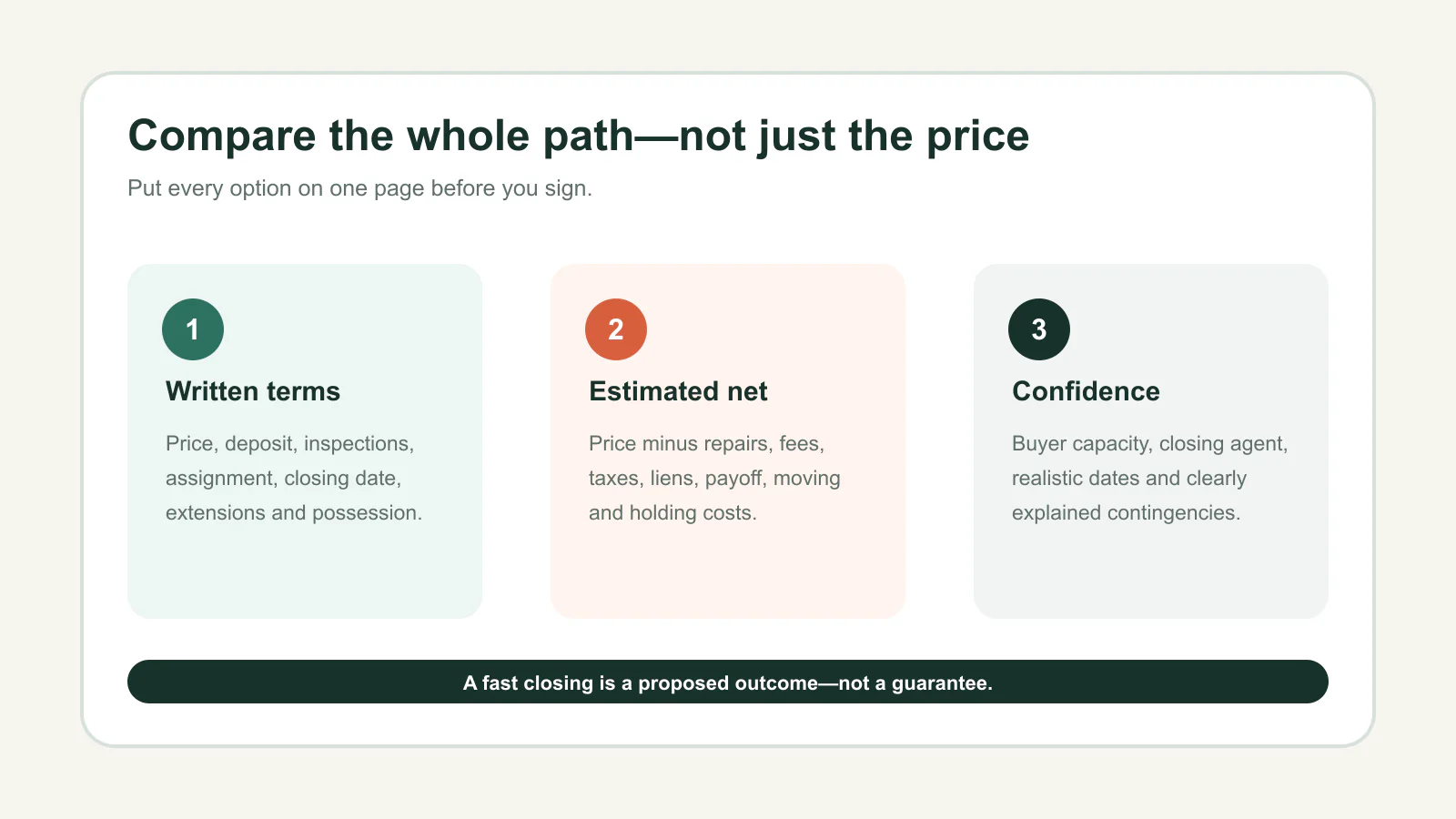
Image: We Buy Homes Apopka
Two offers can both say “cash for your home” while creating completely different lives after closing.
In a conventional direct cash sale, the seller transfers the property, the closing process addresses liens and mortgage payoff, and the parties agree when possession changes. In a sale-leaseback, the seller transfers ownership and then remains under a lease as a tenant.
The questions that separate them
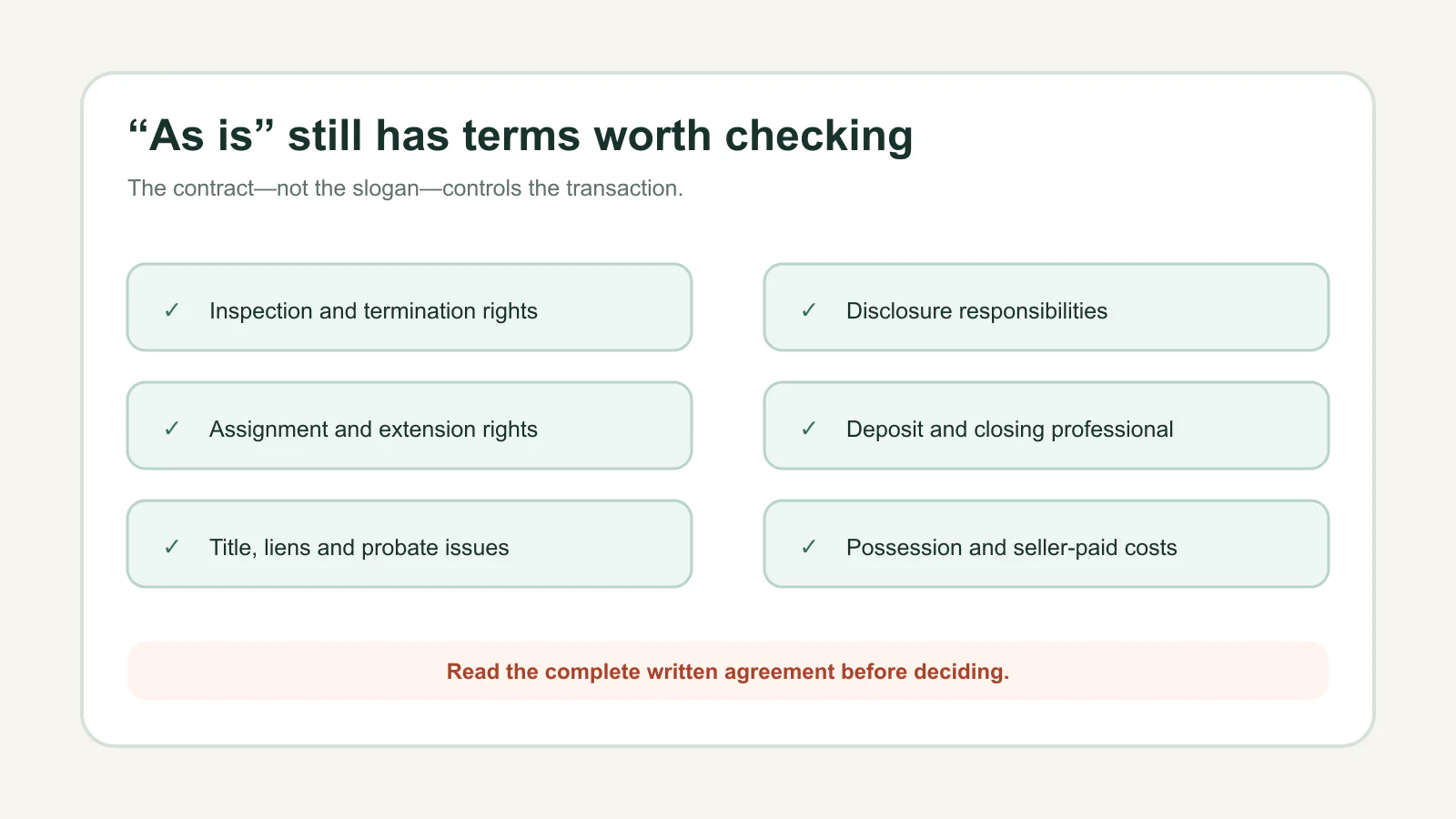
Ask every buyer in writing:
- Who receives the deed at closing?
- Will the mortgage be fully paid and released?
- When must the seller leave?
- If the seller stays, under what lease, rent, term, increases, and default rules?
- Is any repurchase right contractual, and what determines its price?
- Which fees reduce net proceeds?
If the offer promises that “nothing changes except you get cash,” the documents deserve more scrutiny. Ownership changes a great deal.
Why sale-leasebacks can become dangerous
The Federal Trade Commission warns that sale-leaseback agreements may include high fees, high or rising rent, and eviction risk. Once the deed transfers, the former owner no longer controls the property merely because they still live there.
The FTC also describes mortgage-relief scams where a consumer signs over a deed but remains responsible for the original mortgage. A legitimate closing should clearly confirm payoff and release rather than relying on the buyer’s promise to make future payments.
Compare alternatives on a net sheet
For each path—direct sale, traditional listing, sale-leaseback, or another solution—write:
- gross price;
- repairs or credits;
- commissions and fees;
- mortgage and lien payoff;
- moving or future rent cost;
- time and certainty;
- final cash at closing;
- obligations after closing.
An offer can be lower yet useful because it is faster and simpler. It should win because the complete tradeoff fits the owner, not because the comparison hides half the transaction.
Sources and limits
Florida contracts, title, foreclosure, and tenancy rights require local review. This article is general education and is not legal or real-estate advice.
Key takeaway
Fast cash does not define the transaction. The deed, mortgage payoff, possession, lease, and post-closing obligations do. Read those before valuing the headline amount.
Apopkacash home salesale leasebackhome equity